
The True Cost of Being a PCO Driver in London: A Complete 2026 Breakdown

Thinking about driving PCO Car Hire in London? Before you sign up for a PCO car, it helps to know exactly where your money goes and what's realistically left over at the end of the week.
A part-time PCO driver can earn somewhere between £250 and £500, whereas a full-time driver working 40 to 50 hours per week can earn up to £1200 per week, depending on Hours, Shift Times & Vehicle Type.
This guide breaks down every cost, from weekly hire to the Congestion Charge, and puts it against real earnings so you can make an informed decision.
What Is a PCO Car, and How Does It Work in London?
A PCO-ready car has been registered under Transport for London (TfL) for private hire (meaning you have to drive for Uber, Bolt, or a private hire company).
The old Public Carriage Office, known as "PCO", is still referred to by the same name, after TfL took over licensing.
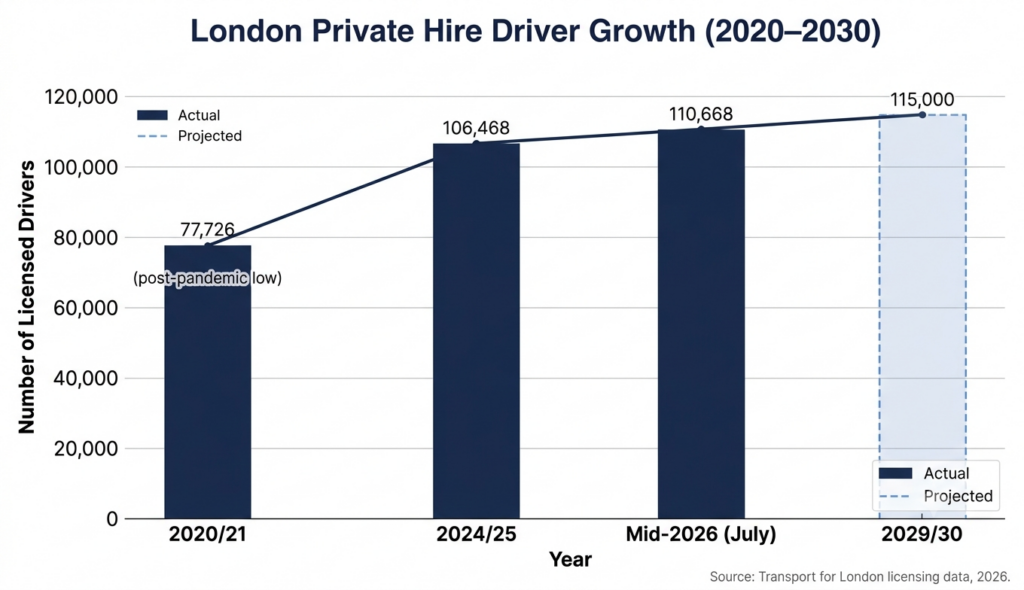
The private hire sector in London is growing faster than ever: The number of licensed private hire drivers has increased to 110,000 - up from around 105,000 just months ago and significantly higher than 77,726 in 2020-21, the lowest since the pandemic.
The total number of licensed private hire vehicles has now risen to around 93,700, and industry analysts believe there could be 115,000 licensed drivers by 2029-30, as demand remains on the upward trajectory. (Source)
Most new and part-time drivers don't purchase their PCO car. Instead, they lease one car every week from a specialist like MKL PCO Car Hire.
An excellent PCO hire package typically includes:
- A TfL-compliant, ready-to-work vehicle
- Private hire insurance (hire and reward cover)
- Servicing, MOTs, and routine maintenance
- Road tax
The magic number is that bundle, of course, when you get that juggling act of insurance, servicing, and compliance done all in one payment.
Read our detailed guide on “What Is PCO Car Hire and How Does It Work in London?”
How Much Does It Cost to Become a PCO Driver in London?
Before your first fare, budget for these one-off costs:
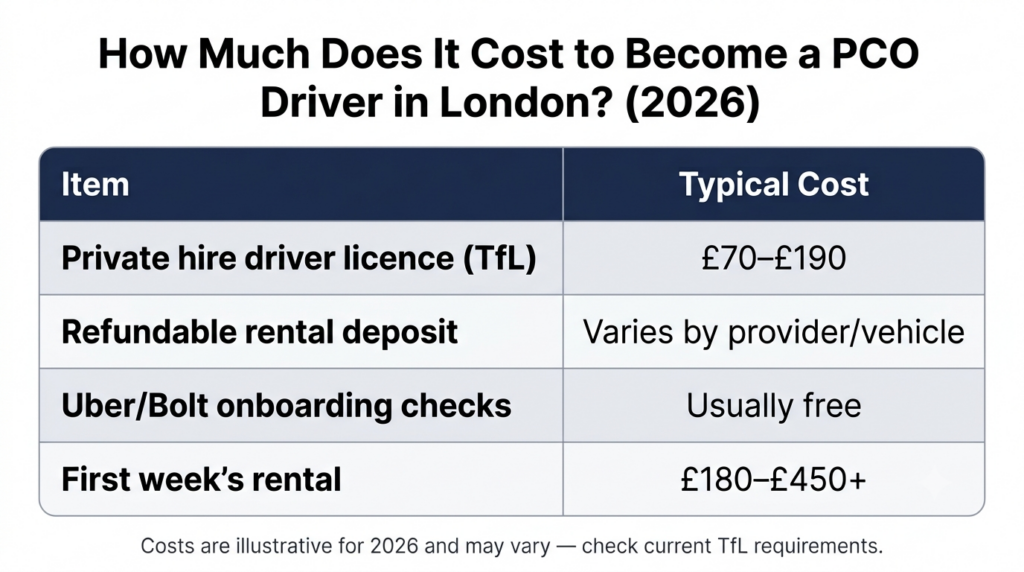
Exact fees change, so always check current TfL requirements before applying.
How Much Does It Cost to Run a PCO Car Each Week?
This is where most new drivers underestimate their real spend. Here's the full weekly stack for drivers looking for PCO Car Hire in London.
1. Car cost (hire, rent-to-buy, or ownership)
Weekly PCO hire in London generally falls into three bands:
- Efficient hybrids and smaller cars: roughly £180–£230/week
- Newer plug-in hybrids and mid-range SUVs: roughly £230–£290/week
- Executive or premium plug-in hybrids: roughly £350–£450+/week
Rent-to-buy plans are not the same: A portion of your weekly payment goes toward owning the vehicle, which is good for drivers who intend to remain in the industry for an extended period of time versus drivers taking their vehicles for a test drive.
2. Fuel or charging
Hybrid versions of PCOs are popular because they save fuel costs much more than petrol-only versions, particularly when driving in urban areas with lots of stop-start driving.
Full electric cars pass this expense onto charging, often at a lower cost per mile, but will vary depending on home versus public charging, as well as local pricing.
3. Insurance (non-negotiable)
Most good PCO hire packages will offer hire/reward insurance within the hire weekly rate; however, make sure you find out if there is an excess if you get into an accident.
Be sure to know what is included in this coverage before comparing rates from different companies, as some will charge an additional fee.
4. Maintenance and repairs
The servicing and MOTs are normally part of a bundled package, but on high-mileage weeks, general wear may be the responsibility of the driver (tyres, brake pads, etc.) Specifically ask about these.
5. Cleaning and presentation
High ratings from a messy interior are bad for bookings, and a clean car is a must for both Uber and Bolt. Plan to spend about £10-20 per week for interior valeting, and if you're doing lots of trips, then more.
6. Platform and business fees
Uber and Bolt charge a commission on each ride (typically 20-25%, but see further comments below). It's not a new bill, but it will directly affect your take-home and should be included in any earnings forecast.
7. Parking, tolls, airports, and small extras
Tickets for an airport pick-up are often included, and some boroughs impose charges for on-site parking during breaks. These accumulate for one whole week of shifts.
8. Congestion Charge and Clean Air Zone charges
As of January 2026, the London Congestion Charge is £18 per day for most vehicles. Fully electric vehicles registered for Auto Pay pay a reduced rate of £13.50, and EVs remain exempt from ULEZ entirely.
If most of your work is inside the zone during charging hours (7 am–6pm, Monday–Friday), this is one of the highest controllable costs in your week — it's a strong argument for choosing a hybrid or electric PCO car.
Putting it together: a full-time driver on a mid-range hybrid, working mostly inside the zone, might realistically see combined weekly running costs (hire + fuel + charge + cleaning + small extras) in the region of £300–£550, before platform commission is deducted from fares.
Check current PCO car hire rates at MKL PCO Car Hire to compare models before you commit.
How Much Do PCO Drivers Earn in London?
Earnings vary a lot by hours, timing, location, and driving style; nobody can promise a fixed income.
With that, here's a realistic planning range based for drivers who drive PCO car hire in London, with typical gross and net hourly figures.
Part-time drivers (20–25 hours/week)
The gross income for many part-time drivers is in the range of £15-£25 per hour pre-cost.
Take-home after car hire, fuel and Congestion Charge (if applicable) can be significantly different, but usually may not be that high when all these elements are factored in, and therefore it's suitable for those who are part-time drivers to supplement their income.
Full-time drivers (40–50 hours/week)
Peak hours and airport runs predominantly seem to pay more for full-time drivers, with some sources reporting net weekly takings in the £250–£800 band, a broad range that could be strongly influenced by the hours driven, type of vehicle, and the avoidance of dead mileage and low fare runs.
These are examples and are not guarantees.
Changes in tax treatment (most PCO drivers are self-employed and will need to submit their own HMRC returns), fuel prices, and platform fee changes can all alter the numbers.
The Winning Formula: Peak Hours, Efficient Vehicles, and Smarter Driving
A few habits consistently separate drivers who do well from those who struggle to cover costs:
- Drive peak windows — early mornings, evening rush, Friday/Saturday nights, and event days pay noticeably better than quiet midweek afternoons.
- Choose the right vehicle for your zone — if you're mostly in central London, a hybrid or EV can save meaningfully on the Congestion Charge and fuel over a year.
- Track dead mileage — time spent driving to a pickup with no fare eats into your effective hourly rate. Staying in high-demand areas between trips helps.
- Keep the car presentable — better ratings mean more consistent bookings on both Uber and Bolt.
Is PCO Car Hire Right for You?
PCO car hire tends to make sense if you:
- Want to start driving without a large upfront vehicle purchase
- Prefer one predictable weekly payment covering the car, insurance, and servicing
- Can commit to enough hours at the right times to comfortably cover your weekly running costs
If you only drive it occasionally, want to build equity in the car from day one, and rent-to-buy might be a better choice, or if you're unsure how much you'll be paying a fixed amount each week in quieter times, it may not be for you.
The best approach is to do the calculations yourself: work out how many hours you can realistically work a week, then factor in hire and fuel/charging, the Congestion Charge, and a reasonable allowance for extras and see how many hours you actually have left.
Not sure whether hire or rent-to-buy fits better? Compare our rent-to-buy plans or speak to the MKL PCO Car Hires team for a straight answer.
Frequently Asked Questions
How much does it cost to be a PCO driver in London?
Combining weekly car hire (£180–£450+), fuel or charging, insurance excess, cleaning, and the Congestion Charge, most drivers face total running costs of roughly £300–£550 a week, depending on the vehicle and how much of their driving happens in the charging zone.
How much does a PCO car cost per week?
Weekly hire typically ranges from around £180 for efficient hybrids up to £450+ for executive plug-in hybrids, depending on the model, age, and provider.
How much does PCO insurance cost?
Most PCO hire packages include hire and reward insurance in the hire charge, but details of what is included are variable from company to company; just make sure you check before you compare quotes.
Is PCO insurance included in car rental?
Yes, with a reputable provider, insurance will typically be included in the weekly package, servicing, MOTs, road tax and more, but of course it's best to check with the provider.
Is PCO car hire worth it in 2026?
If you're able to work the hours and when they need to be worked, PCO hire can be a good way to get a bit of money without having to pay for a car in full.
It doesn't work well for occasional or very part-time drivers, where fixed weekly charges are difficult to afford.
Do PCO drivers have to pay the Congestion Charge?
Yes, it is possible to drive in the zone during charging hours – currently £18 per day, but £13.50 per day for eligible electric cars on Auto Pay. Please ensure that vehicles are checked with current TfL rates, which may be variable.
Related Posts
More miles, more passengers, more stop-start traffic through central London — a PCO vehicle works harder in a single week than mos

Uber Car Hire Requirements UK: The Complete 2026 Guide
Considering driving an Uber but not cert
Leave a Reply